
Category Archives: Blog-uk

long distance travel with young children

Written by: Lisanne | Published: 12 February 2026

long distance travel with young children

Travelling long distances with children is a wonderful adventure. Discovering new cultures together, making memories and seeing the world through your child’s eyes — it’s special and incredibly valuable. At the same time, travelling with children can bring slightly different challenges compared to travelling with adults, especially when it comes to health and safety.

The immune system of children is still developing. As a result, (tropical) infectious diseases can often be more severe in children. That’s exactly why good preparation is especially important. At vaccinatiecentrum.nl, we are happy to think along with you, so you can travel with peace of mind.

Vaccinations: personalised protection

For long distance travel, vaccinations are an essential part of the preparation. Many vaccinations given to adults are also suitable for children, sometimes in an adjusted dosage or with a different method of administration. We also check the timing in relation to the National Immunisation Programme and assess whether the duration of protection or general indication differs.

Every child is different, which is why we always provide personalised advice. We recommend visiting us at least six weeks before departure. This allows enough time for any follow-up vaccinations and ensures that vaccines have sufficient time to work optimally before travel.

Injections and anxiety: we take our time

For some children, injections can be quite stressful. Fear of pain, loss of control or simply the unknown can cause a lot of tension. We understand that very well. That’s why at vaccinatiecentrum.nl we take our time and ensure a calm, child-friendly approach.

For severe needle anxiety, special options are available, such as a needle anxiety consultation. With tools like the Buzzy or ShotBlocker, we can help reduce the sensation of pain. Feel free to contact us. We are happy to explain the options in more detail.

Mosquitoes: small insect, big risk

At many long distance destinations, mosquitoes can transmit diseases such as malaria, dengue and zika. Young children are particularly vulnerable to these illnesses, making good mosquito protection crucial.

It is important to know that mosquito repellents containing DEET may need to be used in adjusted concentrations for children. In some situations, such as travel to high-risk malaria areas with children under five years old, travel may even be discouraged. During a (telephone) consultation, we discuss this thoroughly and honestly, so you can make a well-informed decision.

Dehydration and the travel health kit

Young children are more sensitive to dehydration than adults, especially in warm climates. Drinking enough fluids is essential to maintain a healthy water and salt balance. Traveller’s diarrhoea is common and must be treated quickly and appropriately in children.

A well-prepared travel health kit is therefore vital. Think of oral rehydration salts (ORS) to prevent dehydration, as well as sufficient sun protection to protect children’s sensitive skin from sunburn.

Setting off on an adventure with peace of mind

Travelling with young children sometimes requires a bit more preparation. But with the right advice, appropriate vaccinations and a well-equipped travel health kit, you can set off with confidence.
Make an appointment well in advance at vaccinatiecentrum.nl for personalised travel advice for your child. That way, you’ll depart well protected and can focus on enjoying the adventure together.

Schedule a telephone call or appointment by calling 085 902 03 03, or make an appointment right away via this link. We hope to see you soon!


gordelroos vaccinatie bewustwordingsweek

Written by: Lisanne | Published: 15 May 2025 | Reviewed: 29 January 2026

Shingles, a condition many are familiar with by name, yet its details often remain unknown.

Shingles manifests in various forms, each with its own story. Statistics show that one in four people will experience it.

In the Netherlands and beyond, attention is given to the symptoms and impact of shingles on daily life. The risk of shingles increases with age due to an aging immune system. The virus causing shingles can suddenly become active, especially in people who have had chickenpox. Although shingles usually resolves on its own, it can be accompanied by intense pain and long-lasting nerve pain, lasting for months to years.

On overgordelroos.nl, you will find extensive information and can share your story, giving shingles a face and sharing experiences.

Prevention of Shingles: The importance of vaccination

For individuals aged 50 and older, there is the Shingrix vaccine, designed to prevent shingles and associated nerve pain. This vaccine contains proteins from the surface of the shingles virus and enhances the body’s immune response. Clinical studies show that Shingrix has an effectiveness of 90% in preventing shingles in people over fifty years old. In many countries, it is successfully administered to seniors aged 60 and older.

Vaccination coverage

Shingles vaccination is reimbursed under certain conditions from the basic health insurance. Consult your health insurance provider for coverage options and terms.

Would you like to schedule a shingles vaccination appointment? You can click on this link or call us at 085 902 03 03.  

overstappen ziektekostenverzekering

The further you travel and the longer your trip, the earlier you usually plan that trip in advance. Perhaps you are already making your travel plans for 2026. In that case, now is the ideal time to think about your health insurance. Does it fit well with your travel plans or would you be better off switching to another health insurance before the turn of the year? This blog will tell you what things to consider.

overstappen ziektekostenverzekering

When are you allowed to change your health insurance?

Switching your health insurance policy or to another health insurance company cannot be done at any moment. Every year, there is a period of about 10 weeks in which this is allowed, beyond that it is not possible, with a few specific exceptions.

This year, health insurance companies are obliged to announce by 12 November 2024 how high their healthcare premiums will be in the coming year. From then on, you have seven weeks to decide whether you want to stay with your current health insurer. If you choose to switch, you must cancel your current insurance by 31 December at the latest. You then have until 31 January 2026 to take out a new health insurance policy, which will then apply retroactively from 1 January.

When is it a good idea to switch health insurance?

There are several reasons why you might want to switch health insurance. Maybe you have had bad experiences with your current insurance company, maybe another insurance company now offers a more favourable premium or maybe you expect to need more healthcare that is better covered by another insurance company. Therefore, during the period when you may switch, take a moment to think about the year to come. 

Does your current insurance cover the healthcare costs and risks that may arise from your (travel) plans for the coming year?

During the switching period, not only can you choose to switch to another health insurer, you can also choose to take out or discontinue supplementary insurances. In the Netherlands basic health insurance is compulsory for everyone, but things like physiotherapy, new glasses or lenses, contraception and travel vaccines are often not covered. Therefore, also go over your plans for the coming year. Are you going to take up a new sport or train more intensively for a sport you already play? In doing so, you run an increased risk of injury, for which you may need physiotherapy. It may be wise to include this preventively in your supplementary insurance. The opposite also applies: have you had supplementary insurance for some time but never had to use the extra care covered by it? Then you may want to consider going back to just the basic insurance.

Your travel plans can also be decisive in choosing supplementary insurance. Are you planning a long trip, or will you be going to a country where you face health risks? If so, travel vaccines are often recommended, for example against hepatitis B, dengue fever or tick-borne encephalitis. There are also diseases against which there are no vaccines, but for which medication is sometimes recommended, such as malaria pills when travelling to areas where malaria is prevalent. In principle, travel vaccines and travel medication are not covered by basic health insurance. To avoid having to pay for these costs yourself, you can get supplementary insurance that does cover them.

Check which healthcare providers you can visit with your health insurance policy

Some basic health insurance policies require that for non-emergency care, you only go to hospitals and other healthcare providers they have a contract with. Check every year whether your insurer has a contract with healthcare providers in your area. If it turns out that there are no contracts with the hospital in your area and you have to travel more than an hour to the nearest hospital that your health insurer does have a contract with, you might want to look for another health insurance. Sometimes, you can also opt for a higher premium with your current insurer in exchange for free choice of care. But it can also be a reason to switch to another health insurance company altogether.

Even if you have supplementary health insurance that covers travel vaccines and/or travel medication, you cannot always get them at every travel vaccination agency. Therefore, check whether your current insurance or the new insurance you are considering has a contract with your preferred travel vaccination agency. Vaccinatiecentrum.nl has a contract with Interpolis, FBTO, Zilveren Kruis and De christelijke zorgverzekering. These also include ZieZo, Gemeenten Optimaal, Gemeente Amsterdam and AON Vitaal. If you are insured with one of these parties, the costs of a consultation, vaccinations and preventive medicines will be reimbursed 100%. We also send the bill directly to your health insurer, so you do not have to pay and submit the bill yourself.

Are you going to study abroad? If so, AON Vitaal is the recommended health insurance.

Do you want to switch? Then make sure to do so on time!

Make sure you think about whether your current health insurance still suits you well before 31 December. After that, you will not be allowed to cancel your insurance until the end of 2026. You must have taken out your new health insurance no later than 31 January. Do you want your consultation at vaccinatiecentrum.nl and your travel vaccines and/or travel medication to be reimbursed? If so, check carefully whether your current or new insurance company has a contract with us.

Published at 6 november 2023 and updated on 3 december 2025.

griepprik griepvaccinatie

griepprik griepvaccinatie

Every autumn it happens again: the start of flu season. Because there are different types of flu viruses and these viruses are constantly adapting, you can become ill over and over again. Unfortunately, getting the flu once does not provide lifelong immunity. However, there are other ways to protect yourself against the flu, including the flu vaccination that is developed every year against the viruses that are most prevalent at that time. You can get this flu vaccination at several places including your GP (general practitioner) and vaccinatiecentrum.nl.

Why vaccinate against the flu?

First of all, the flu is not the same as a cold. The flu is a lot more serious. The symptoms can last for 1-3 weeks and for people in specific risk groups, it can have serious consequences; every year, some 4,700 people die from the flu. This is why a yearly study is carried out on which flu viruses are expected to circulate. Based on this study, a vaccine is formulated. With this vaccine, you have a smaller chance of catching the flu and, should you still get the flu, you will get less sick.

Who is the flu vaccination for?

A large group of people already receive an invitation for the flu vaccine from their doctor every year. This includes all people aged 60 and over, as well as women who are more than 22 weeks pregnant, people with a BMI over 40 and people who are at increased risk of a severe course of flu due to lung disease, diabetes or another condition. When you receive an invitation for the flu vaccine from your doctor, there is no cost involved.

However, you can also get the flu vaccine if you are not in a high-risk group. Healthcare workers, for example, can get the flu vaccine so that they are less likely to infect patients with the flu. Often, healthcare employers reimburse the flu vaccine for their staff. If this is not the case or if, as a healthcare employee, you go for the flu vaccination on your own initiative, it is at your own expense.

If you do not work in healthcare or do not fall in one of the risk groups, you can also arrange the flu vaccination yourself. You can do this at your own expense at vaccinatiecentrum.nl. Some supplementary health insurance policies offer reimbursement for the flu vaccination, the basic insurance does not.

Benefits of the flu vaccination

Those who fall into the risk groups are invited for the flu vaccination to better protect themselves. Even if you fall outside the risk groups, the flu vaccination can have many benefits. After all, you not only protect yourself with it, but also others. When you reduce the chance of getting the flu yourself, the chance of infecting someone else is also reduced. Earlier, healthcare workers were named as a special group that could get the vaccine for that reason. However, this applies to anyone who comes into frequent contact with potentially vulnerable people. For example, are you a caregiver? Then you might consider getting the flu vaccination to protect your loved ones.

Even when you are at low risk of complications, getting the flu is unpleasant. You will be out of the running for at least a week, but it can also last three weeks. To avoid illness, it may be worth considering getting vaccinated against the flu.

Where and when do you get the flu vaccination?

The flu season traditionally starts in December. Since it takes two weeks for the vaccine to take full effect, you can get the flu vaccine starting in October. This will protect you for one flu season. If you want long-term protection, you will have to get the flu vaccination every year.

If you fall into one of the groups that are offered a free flu vaccination you will be invited for this by your GP or institution doctor. Do you choose to get vaccinated on your own initiative? Then you can get the flu vaccination at your own expense at vaccinatiecentrum.nl. We offer a quadrivalent vaccine, which offers protection against the four flu viruses that are expected to be the most pathogenic at that moment.

Would you like to know more about the flu vaccination or schedule an appointment right away? Then feel free to contact us.

First published on 24-08-2023. Update on 17-11-2025.

vaccinatie gonnoroe

vaccinatie gonnoroe

Starting from August 1, 2025, the National Health Service (NHS), the public healthcare system of the United Kingdom, will offer meningococcal B vaccinations in England, Scotland, Wales and Northern Ireland. This vaccination is part of the world’s first immunization campaign aimed at preventing gonorrhoea.

What is gonorrhoea?

Gonorrhoea is a sexually transmitted infection (STI) caused by the bacterium Neisseria gonorrhoeae. The bacterium is transmitted through unprotected sexual contact including oral sex, hand contact and sharing of sex toys. It can be found in the mucous membranes of the vagina, urethra, anus and throat.

Symptoms of gonorrhoea may include:
• Pain or a burning sensation when urinating
• Discharge from the penis (commonly known as “the drip”)
• Bleeding between periods or increased vaginal discharge

However, not everyone with gonorrhoea develops symptoms. Without treatment, gonorrhoea can cause serious complications such as epididymitis or prostatitis, pelvic inflammatory disease, reduced fertility or ectopic pregnancy.

What is Bexsero?

Bexsero is a vaccine that provides protection against meningococcal type B, a bacterium that can cause severe illnesses such as meningitis and sepsis. In the Netherlands, children receive the meningococcal ACWY vaccine through the National Immunization Programme, as these types are the most common. Meningococcal B occurs less frequently in the Netherlands and is therefore not included in the programme partly because of the somewhat higher rate of side effects. In the United Kingdom, however, the Bexsero vaccine is part of the childhood vaccination programme.

Protection against gonorrhoea

Research has shown that the Bexsero vaccine (4CMenB) also offers some protection against gonorrhoea. This is because the meningococcal and gonorrhoea bacteria are genetically very similar, sharing about 80–90% of their DNA. Thanks to this genetic relationship, the vaccine provides what is known as cross-protection.

Studies indicate that the vaccine may reduce the risk of gonorrhoea by 30–40%. However, this protection is not complete and it is still unclear how long it lasts — most likely around two to three years.

Why a vaccination campaign in the United Kingdom?

The UK has decided to make the Bexsero vaccine freely available to high-risk groups such as gay and bisexual men. This decision follows a sharp increase in gonorrhoea infections: in 2023, more than 85,000 cases were reported in England. In addition, some strains of gonorrhoea have become resistant to antibiotics, including ceftriaxone, the current standard treatment. In a few cases, no antibiotic has been effective at all, highlighting the growing need for preventive measures such as vaccination.

Situation in the Netherlands

In the Netherlands, the Bexsero vaccine is currently not part of the National Immunization Programme. Research into its effectiveness against gonorrhoea is still ongoing.

Vaccination on personal request

At vaccinatiecentrum.nl, you can choose to be vaccinated with Bexsero on your own initiative — both for protection against meningococcal B and (off-label) against gonorrhoea. The vaccination consists of two doses given at least four weeks apart. You pay for both the vaccine and the consultation. Current prices can be found on the price list.
Feel free to visit vaccinatiecentrum.nl for personal health advice or to schedule an appointment right away.

This blog is published 9 sept 2025 

reisvaccinaties Thailand

Written by: Lisanne | Pubished: July 31, 2025

My name is Lisanne, and I am a travel nurse at Vaccinatiecentrum.nl. After completing my internship at the Vaccination Center, I decided to take a longer trip to Thailand and other destinations together with my sister. I’d like to share some highlights from this special experience — and the health preparations we made before traveling.

Well prepared for the journey

Before departure, we thoroughly researched the health risks and recommended vaccinations for Thailand. Since we planned to travel for an extended period and our itinerary wasn’t fully fixed, we opted for comprehensive vaccinations including DTP, hepatitis A and B, and rabies. Hepatitis A and DTP are part of the standard advice for travelers to Thailand.

Because we planned to get a tattoo during the trip, hepatitis B vaccination was also recommended. We were advised to pay close attention to hygiene and sterile needles, and to only visit certified tattoo studios.

We chose rabies vaccination because we expected to spend time in areas with many stray dogs, cats, and monkeys. Since we wouldn’t always be near a major city, in case of a bite, scratch, or lick, we wanted to be sure treatment would be easier and faster. Fortunately, nothing happened during our trip, but it gave us peace of mind—especially since many animals didn’t look very healthy.

Exciting and special

Traveling outside Europe for the first time and heading straight to Thailand for a month was exciting. But what an unforgettable adventure it was! From bustling cities to spiritual temples, tropical beaches, and countless impressions — Thailand surprised and moved us.

First stop: Bangkok

Our journey began in the capital, Bangkok, where we were immediately struck by the contrast between tradition and modernity. Ancient temples stand side by side with hyper-modern malls and skyscrapers. We expected a more traditional city, but Bangkok sometimes felt almost futuristic.

One thing that immediately caught our attention was the many mosquitoes. Knowing that the tiger mosquito, which transmits dengue among other diseases, is active during the day, we regularly applied DEET. It didn’t prevent all bites, but definitely a large part. In the evenings, other mosquitoes appeared, which can carry diseases like malaria. So we remained vigilant and well protected both day and night.

Peace and culture in Chiang Mai

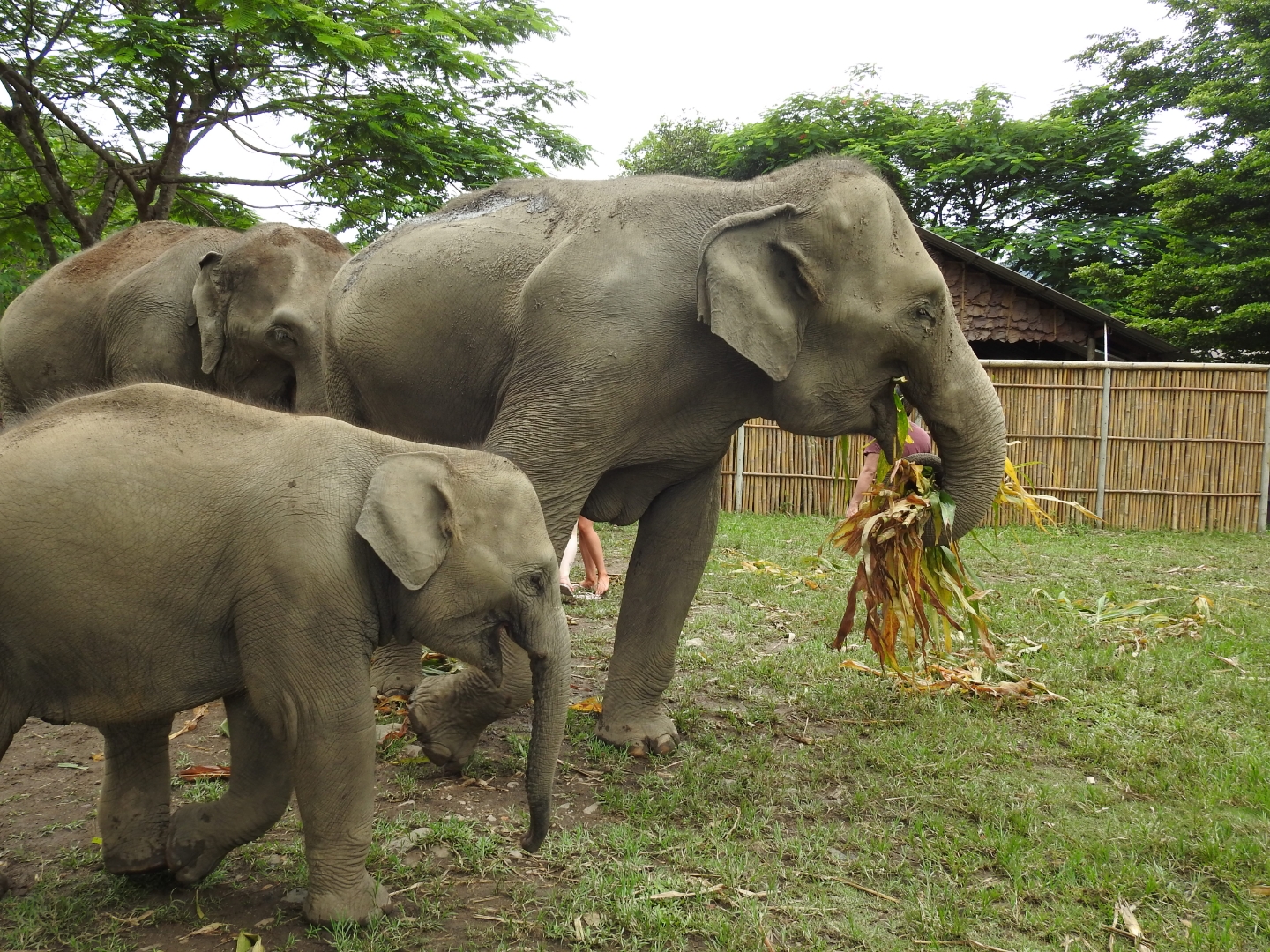
After a few days, we took a 12-hour train ride to the quieter northern city of Chiang Mai. There, we immediately felt the cultural shift. The highlight was meeting elephants at a sanctuary focused on animal welfare—no shows, just genuine care. A moving and emotional moment.

The Buddhist culture in Chiang Mai left a deep impression. The serene temples and respect for monks and elders gave the city a special atmosphere. Since the area is higher and cooler, there were thankfully fewer mosquitoes—definitely a relief after the itchy bites in Bangkok.

Street Food: a feast for the senses

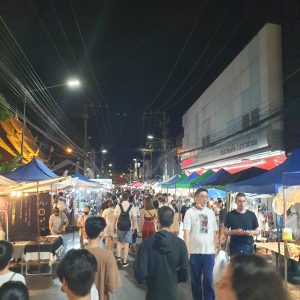
Everywhere we went, we were tempted by the aroma of street food. In Thailand, people rarely cook at home; for just a few baht, you can grab a fresh meal on the street. From spicy curries to mango sticky rice, but Pad Thai was our favorite—freshly cooked on a scooter-mounted griddle, always with a line of waiting customers.

We also noticed the importance of good hygiene: make sure food is properly heated, freshly prepared, and that vendors have clean hands. This helps prevent classic traveler’s diarrhea.

Sun, sea, and relaxation in the south

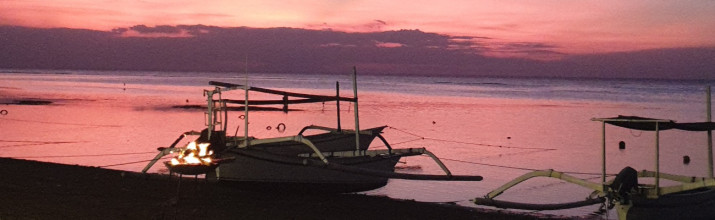
From the north, we traveled south toward Phuket and Krabi. Here, it was all about sun, sea, and relaxation. We snorkeled in crystal-clear water among tropical fish and enjoyed the colorful longtail boats on the beach. Unlike peaceful Chiang Mai, Phuket was lively, with many tourists, nightlife, and activities.

A journey never to forget

Our trip through Thailand was unforgettable. We discovered beautiful places and learned how important it is to be well prepared for travel. One thing is certain: we will come back.

Are you traveling to Thailand or another tropical destination?

Get informed by the specialists at Vaccinatiecentrum.nl. Easily book an appointment for your travel vaccinations and receive personal advice tailored to your destination, length of stay, and health situation.

Plan your appointment — healthy travel starts here.

The current image has no alternative text. The file name is: VC_FSME_Vaccinatie.png

Summer is almost here and I can tell from everyone around me! Many people are really looking forward to a holiday. And to be honest, I am too. Strolling through an unknown city and visiting local markets. Baking on the beach, while all kinds of vendors try to sell me fake Louis Vuitton stuff. Or how about exploring the beautiful nature with hiking and cycling tours through Eastern Europe? I am really looking forward to that.
Or back to basics in a tent on a campsite in the middle of nature in the Czech Republic or Hungary to relax for a while.

You don’t have to travel far to immerse yourself in a beautiful new environment. There is more than enough to do and see in Europe. An added advantage? You can easily visit many European destinations with your own car. Ideal if you don’t feel like waiting in long queues at the airports, you want to take your own bike or you don’t want to worry about whether your luggage stays within the weight limits.

This blog was published on May 3, 2021, written by one of our travel nurses and updated on June 19, 2025.

Health risks in Europe


But what about the health risks when you go on holiday in Europe? You would think that a holiday in Europe would not be much different from our own little country. But that is not true. It is precisely the holidaymakers who want to explore European nature this summer who have some risks.
There is that one annoying creature that can carry a number of viruses: the tick. Ticks can transmit these viruses to people. The most well-known disease that you can get from ticks is Lyme disease. But there are also other diseases that can develop after a tick bite. One that not many people are familiar with is the FSME/TBE virus. If you contract this virus, it can have serious consequences. It can cause brain (meningeal) inflammation. And then you are figuratively, but perhaps also literally, far from home. Fortunately, this virus is almost non-existent in the Netherlands, but there are many countries in Europe where this risk is greater.

When are you at risk of FSME/TBE?


There is a good chance that you will go out during your holiday to explore your travel destination. When walking through nature reserves, but also during bike rides or other activities, there is a very high chance of being bitten by a tick. Especially when you are wearing short clothing. You do not realize when it happens and when you find out that there is a tick, it has already bitten itself.
In addition to lovers of activities in nature, there are other people who are at increased risk of a tick bite, for example bird watchers and campers. They spend a lot of time in nature and therefore have an increased risk of being bitten by a tick.
In addition, ticks can also be found in gardens and parks. So having a nice picnic in the city is not without risk. If you are going to undertake these types of activities in the risk area of ​​FSME/TBE, there is a chance that you will become infected with the virus.

How to prevent infection with the FSME/TBE virus


Fortunately, there are preventive measures against the FSME/TBE virus. There is a vaccine against it. For more information about this vaccine and the virus, take a look at our information page about FSME/TBE. With a series of three vaccinations, you are protected for three years.
If you then take a booster vaccination that ensures that your immune system starts producing antibodies again, you are protected for five years.
This vaccination does not protect against other viruses that ticks can transmit. You must therefore still take extra measures to prevent a tick bite. It is wise to wear covering clothing when you are in nature to ensure that ticks cannot bite. Applying DEET, an insect repellent, also helps to prevent tick bites.
These measures do not provide 100% protection against tick bites. It is therefore important to check yourself for tick bites every day if you have been at risk of a tick bite.

More information about health risks during your summer holiday in Europe?


Do you want to know whether your holiday destination entails risks? Then it is wise to check the sites www.lcr.nl and https://www.nederlandwereldwijd.nl/reizen/reisadviezen. There, advice is given per country about which vaccinations you need and what risks there are.

If you have any more questions about vaccinations or health risks while travelling, please feel free to contact us. We are happy to help you! Because being well prepared for your trip is half the battle!

kinkhoest vaccin

The whooping cough vaccine has been offered to all children in the Netherlands through the National Vaccination Program since 1953. The vaccination rate is above 90%, so the chance that you have been vaccinated against this disease is very high. However, an advisory report recently appeared from the Health Council recommending that people who work with small children be offered a whooping cough vaccination. We will explain why in this blog.

Why vaccinate against whooping cough?

Whooping cough is extremely contagious and is especially dangerous for babies. Adults usually dont get very sick, but can still carry the virus. Babies are vaccinated three times before their first birthday,  when they are three, five and eleven months old. This means that they are not yet protected in their first three months of life. And although the first injection really makes a difference, the protection is only complete once all three vaccinations have been received.

In order to protect babies during those first months, an additional vaccine has been offered to pregnant women since 2019. This DKT injection, also known as the 22-week injection, ensures that babies are also protected against diphtheria, whooping cough and tetanus in their first three months. For the mother herself, this works as a booster of the vaccinations she already had as a child. But not all mothers take this injection; currently around 70% get the 22-week injection. Their children will then receive the DTP-Hib-HepB vaccination as soon as they are two months old.

Extra protection for young children

Despite this extra vaccination for pregnant women, it is wise to take additional protective measures. Some children have received fewer antibodies from their mother, for example because they were born prematurely. Some mothers have not received the booster shot. And although the booster vaccine helps, the protection against whooping cough is not yet complete. This is only the case when the child itself has been fully vaccinated.

For this reason, it is now recommended that people who work with young children, for example in healthcare or childcare, be offered an extra whooping cough vaccine. This vaccine is not for their own protection, but for that of the children they care for. The consequences of a whooping cough infection can be very serious for these children and it is in the interest of all of us to prevent the spread of this disease as much as possible.

Why is whooping cough an issue again?

We have been vaccinating against whooping cough since 1953 through the National Vaccination Programme. However, in recent years we have seen the number of infections increase again. Since 1996, this is partly because the structure of the bacteria changed around that time, which means that the vaccine works slightly less well. As a result, people who have been vaccinated can also become ill.

During the pandemic, the number of infections was much lower. This makes sense, because the measures that were taken at the time to prevent corona infection are also effective in preventing the transmission of other diseases, including whooping cough. As a result, fewer people built up immunity to whooping cough during the pandemic. That is one of the explanations why the number of infections is now higher. That makes it even more important to take extra steps to protect ourselves, and children, against this disease.

Who should consider the vaccination and how do you get it?

The Health Council believes that employers should offer the whooping cough vaccine to their employees. This includes anyone who regularly works with children under six months of age. These include midwives, childcare workers, doctors, nurses and maternity care workers.

Do you fall into this target group? You may soon receive information from your employer about how this will be offered at your workplace. For example, you will hear where and when you can get the vaccination. Sometimes this is provided at your workplace, sometimes employers make arrangements with a vaccination centre. The vaccine is always administered by a qualified healthcare professional. In order to provide optimal protection, the whooping cough vaccine must be repeated every five years. Is there no policy at your workplace yet? Then ask your employer about it.

Whooping cough vaccination at vaccinatiecentrum.nl

You can contact vaccinatiecentrum.nl with all your vaccination questions, our nurses will be happy to help you. The booster vaccine against whooping cough consists of one injection. Have you not reveived a whooping cough vaccine before, including the DTP vaccination? Then you need three vaccines with a total of at least seven months between them. Our nurses will think along with you and will give you personal advice based on your health, vaccination history and preferences.

Are you an employer and do you want to offer the whooping cough vaccine to your employees? Then contact us to discuss the possibilities.

Published at 11 december 2024.

hpv baarmoederhalskanker vaccin

In 2010, a new vaccination was added to the Dutch National Immunization Program: the HPV vaccination. This vaccination protects against the human papillomavirus (HPV). Nearly everyone (80-90% of all people) will be infected with this virus at some point in their life. Usually, you won’t notice it, but in some cases, an HPV infection can lead to cancer. In the Netherlands, this happens to an average of 1,100 women and 400 men each year. To prevent this, you can get vaccinated. Vaccinatiecentrum.nl collaborates with “Samen tegen HPV” to increase knowledge and awareness about HPV and HPV vaccinations.

Who can get vaccinated against HPV?

Initially, the HPV vaccination was only offered to girls. When an HPV infection results in cancer, it is cervical cancer in over 70% of cases. Therefore, the HPV vaccination is primarily known for its ability to prevent this disease. However, an infection with the virus can also lead to other types of cancer, including those of the mouth and throat, anus, penis, vagina, and vulva. Since 2022, the vaccination has also been offered to boys. This way, they are protected against the other types of cancer caused by HPV and contribute to better protection against HPV among the entire population.

Human papillomavirus is sexually transmitted. The more people are protected against the virus, the less it occurs and the less it is transmitted. Therefore, it is important that both girls and boys receive the vaccination.

When can you get vaccinated against HPV?

The HPV vaccination according to the National Immunization Program consists of two shots, with at least six months between them. The invitation for the first shot is sent in the year a child turns 10, but the decision can also be made later. Teenagers up to 18 years old can get vaccinated against HPV for free through the Dutch National Immunization Program.

Additionally, a catch-up campaign started in 2022 to give young adults who have not yet received the vaccination one last chance to get it for free through the Dutch National Immunization Program. Those born after 1996 could get the first shot in 2022 and 2023. The second shot could be received until June 1, 2024. If you were born after 1996 and want to be vaccinated but didn’t get the first shot during the catch-up campaign, you can contact the GGD to discuss the options.

HPV vaccinations for adults

Even at a later age, when you are already sexually active or have had an HPV infection, vaccination can protect you against HPV. Were you born before 1996? Then you can no longer get vaccinated for free through the Dutch National Immunization Program. However, you can get vaccinated at your own expense. You can book an appointment with your GP or a specialist, such as vaccinatiecentrum.nl.

What to expect from the HPV Vaccination?

The HPV vaccination is administered through an injection in your upper arm muscle. Shortly afterward, you may experience some pain or itching around the injection site and muscle pain. Some people experience abdominal pain, headache, fatigue, nausea, or a fever for 1 to 3 days. The HPV vaccination has been administered in the Netherlands since 2010 and no serious side effects have ever been reported during that time.

It is not yet clear how long the protection from the HPV vaccination lasts. However, we do know that the protection lasts at least ten years.

It is important to know that you are not protected against all types of cervical cancer. Therefore, even if you are vaccinated, it’s important to participate in the cervical cancer screening program from the age of 30.

The Gardasil 9 HPV vaccination

Vaccinatiecentrum.nl offers the Gardasil 9 HPV vaccination. This protects against more types of HPV than the vaccination administered by the Dutch National Immunization Program; it covers the most common high-risk HPV types as well as the most common low-risk HPV types.

Get the HPV vaccination at vaccinatiecentrum.nl

Do you want to get vaccinated against HPV? You can schedule an appointment with vaccinatiecentrum.nl

Want to know more about the vaccination or book an appointment right away? Contact us at info@vaccinatiecentrum.nl or call 085-9020303. One of our vaccination experts will assist you.

Dengue vaccinatie

A vaccine has recently become available against one of the diseases you can contract in tropical regions: dengue. This means you can now do more to protect yourself than just the standard measures you should take to prevent mosquito bites. A reassuring thought when you travel. In this blog, we answer all your questions about this vaccine.

Dengue vaccination

What is dengue and where is it prevalent?

Dengue or dengue fever is a disease caused by the dengue virus, which is transmitted by the yellow fever mosquito and the Asian tiger mosquito, among others. These mosquitoes are found in (sub)tropical areas, such as the Caribbean, Africa, Southeast Asia and Central and South America. When travelling to any of these areas, it is wise to take preventive measures.

What happens if you contract dengue?

When you are bitten by a mosquito carrying the dengue virus, it does not necessarily mean that you will get sick. In fact, usually people do not develop any symptoms. When they do, symptoms appear within three to 14 days of infection. The symptoms you may then develop resemble those of the flu. These include coughing, sudden spikes in fever, sore throat, headache, muscle pain, joint pain, nausea and vomiting. in most cases, the symptoms subside within a few days to a week. Generally, people have few long-term symptoms from a dengue infection other than the memory of a holiday that went down the drain. In some cases, however, the disease progresses more severely. When a dengue infection is more severe, you will notice dark red spots on the skin and bleeding from the gums, heart, nose, liver and intestines. This bleeding can be so severe as to cause what is known as dengue shock syndrome, which can lead to death.

Here’s how to prevent a dengue virus infection

A dengue virus infection not only messes up your travel plans, it also carries major risks, as you have read above. Fortunately, there are measures you can take to reduce the risk of infection. There are also measures you can take to reduce the chances of getting seriously ill in case you do get infected.

Preventive measures against mosquitoes

Preventing infection is, of course, the most important thing you can do. In the case of dengue, this means taking anti-mosquito measures. The mosquitoes that transmit dengue are mostly active during the day, so make sure you wear clothes that cover your body as much as possible and apply mosquito repellent, such as DEET. Do this at night too and sleep under an impregnated mosquito net. In dengue-prone areas, there are often other mosquitoes that are active at night, such as the mosquito that spreads the malaria virus. So protect yourself against mosquito bites day and night.

The dengue vaccine

Nowadays, a vaccine is also available that prevents dengue altogether or prevents the disease from becoming severe. The dengue vaccine is mainly intended for people who have had dengue before. Usually the first infection is mild, but with the second or third infection you have a higher risk of becoming very ill. As a result, anti-mosquito measures are especially important for these individuals, combined with the dengue vaccine as extra protection against a severe course of illness.

The dengue vaccine is a live attenuated vaccine consisting of two doses, which must be given at least three months apart. Up to three days after the vaccination, you may experience fever, head and muscle aches, fatigue and pain or redness at the site where the vaccination was administered. You may also experience mild symptoms similar to dengue symptoms, such as headache, joint pain and skin rash, 7 to 14 days after the vaccination. If you have never had dengue before, you will experience more side effects than if you have been infected before. The second dose usually gives much fewer side effects.

As it is a new vaccine, it is not yet known how long the vaccine offers protection.

Are you going to travel? Discuss the dengue vaccine and other travel vaccines with vaccinatiecentrum.nl

Planning a nice trip? Contact vaccinatiecentrum.nl right away to find out, together with our travel nurses, which health measures are best for you. For example, if you are going to an area where dengue is present and you have had it before, it is wise to get vaccinated. As the vaccine consists of two doses that must be given at least three months apart, it is important to contact us well in advance. For personalised travel advice, book an appointment via info@vaccinatiecentrum.nl, call 085-9020303 or book an appointment.

10/20