





Tick borne encephalitis
Dit blog is gepubliceerd op 19 november 2019 en geactualiseerd op 22 juni 2023
Most outdoor enthusiasts are all too aware of the danger posed by ticks.
The widespread attention to Lyme disease means that more and more people know about the symptoms, treatment and prevention of a tick bite. What far fewer people know is that ticks can also transmit another disease: namely tick-borne encephalitis, or TBE, a disease caused by the TBE virus. Do you enjoy camping, hiking, gardening or other outdoor activities? In this blog, you’ll learn how to recognize, treat and, of course, prevent TBE.
What is tick-borne encephalitis?
Tick-borne encephalitis is meningitis or encephalitis caused by the TBE virus. This virus is transmitted by infected ticks. Before 2016, this virus was almost exclusively found abroad, but since then the virus has also been found in ticks in the Netherlands. It is therefore important when informing people about ticks to talk not only about Lyme disease but also about tick-borne encephalitis.
What happens when you have a TBE infection?
There are different subtypes of the virus, but the symptoms are generally similar. Usually, infection with the TBE virus does not cause any problems. In many cases, a person does not get sick. However, when someone does get sick and the infection progresses to tick-borne encephalitis, you can distinguish two phases.
The first phase begins 7-14 days after the tick bite. During this phase, a person may experience headaches, muscle aches, fever and nausea. However, one-third of infected people do not notice this phase. This phase lasts 2-7 days and is often followed by a week without symptoms.
During the second phase, two types of inflammation may develop: inflammation of the brain tissue (encephalitis) and/or of the meninges (meningitis). During this stage, symptoms such as severe headache or fever occur and hospitalization is necessary. There are currently no medications to treat tick-borne encephalitis.
How do I prevent infection with the TBE virus?
In the case of tick-borne encephalitis, it is easier to take preventive measures against a tick bite than to treat the disease when an infection occurs. By taking preventive measures before you put yourself in a high-risk situation, you significantly reduce the chances of a tick bite. You are at increased risk of a tick bite when:
- It is spring or summer
- You go to forests or grassy areas
- You undertake an outdoor activity such as camping, biking or hiking
- You are outside for long periods of time for other reasons
Areas in Europe where ticks may carry the TBE virus include Germany, Estonia, Hungary, Latvia, Lithuania, Croatia, Austria, Poland, Slovenia, Slovakia and part of Scandinavia. In these areas, as well as in the Netherlands and other countries where ticks are present, it is wise to take preventive measures. Wear long sleeves, long pants and tuck your pant legs into your socks. Use insect repellent with DEET and check yourself and others for ticks afterwards.
Remove ticks with tick forceps, clean the skin with alcohol and keep a close eye on the affected skin for the next few days. The TBE virus is transmitted almost immediately after the bite, but quick removal seems to reduce the chance of infection. In addition, removing the tick reduces the chance of contracting another disease, such as Lyme disease.
Vaccination against tick-borne encephalitis
Vaccinatiecentrum.nl offers a vaccine that provides up to 95% protection against TBE. This vaccine protects against each of the three subtypes of TBE. A tick-borne encephalitis vaccination is especially recommended if you plan to spend an extended period of time in an area where TBE is prevalent.
The vaccine against TBE consists of a series of three vaccinations. Before departure, two vaccinations are given one month apart. After 6-12 months, or before the start of the next tick season, a booster vaccination is given. After this, you are protected against tick-borne encephalitis for three years.
If you are going to a country where tick-borne encephalitis is prevalent or if you plan to spend a lot of time in nature, feel free to book an appointment at vaccinatiecentrum.nl for a personalized health consultation.
Thailand and Bali local foods
Dit blog is gepubliceerd op 7 mei 2023
Our nurse Lisanne tells:
“I have always intended to go on a long and distant journey one day. For this reason, my sister and I decided that we would travel around Thailand together and then fly to Bali. We only booked the outward and return flights, the rest we would figure out along the way. For the travel vaccinations, we first went to vaccinatiecentrum.nl for advice. I would need the DTP (diphtheria, tetanus, polio), hepatitis A and rabies vaccinations. I had already had most of these vaccinations, requiring only a repeat DTP vaccination. Because we were in Asia for less than 3 months, a typhoid fever vaccination was not necessarily needed either. Apart from vaccinations, one of the most important pieces of advice was to wash your hands well and make sure the food was prepared properly. If you do not prepare your food yourself, you should make sure it has been prepared in a way that ensures that bacteria and viruses in the food die before you eat it.
We landed in Bangkok, the capital of Thailand, and right away we had to get used to the different culture and people. There were scooters everywhere and lots of taxi drivers approached us. We were among the first tourists to come back to Thailand after tourism had virtually stopped because of the Covid pandemic.
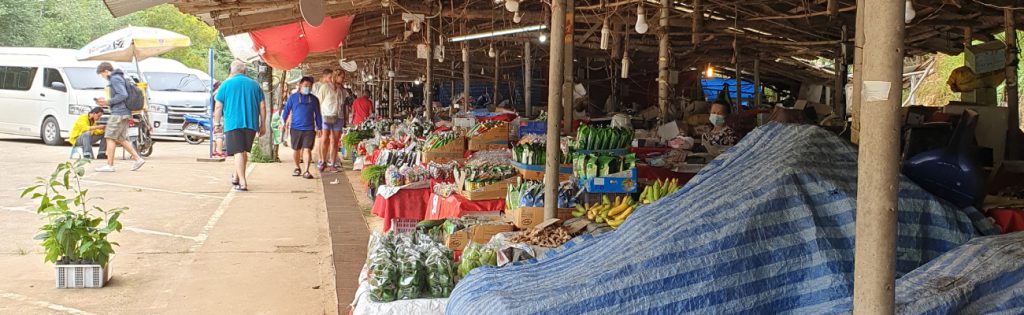
We soon saw that locals did not eat in restaurants, but mainly got food from street food stalls. This made us very curious about the food prepared in these stalls. Because both my sister and I did not speak Thai, we did not know what we would get, but we decided to queue at the back of a busy street food stall anyway. When it was our turn, fresh Pad Thai was being prepared before our eyes. This is a local dish usually made with a lot of spices, noodles and prawns. When we ate this we found out why there were so many people queuing for it, it was really delicious and it only cost 80 cents!
After that delicious pad thai, we got a taste for street food and tried several stalls. One of these stalls sold pre-cooked meat unknown to us. Unfortunately, my sister and I woke up the next day with a slight stomach ache and diarrhoea, probably something was wrong with the meat after all. We had not paid close attention to ensure ourselves that the meat was well-cooked and freshly prepared. Fortunately, both of us were only sick for a day and then we were able to get back to our adventure.
When we left for Bali, we thought we could expect pretty much the same in terms of food and street food stalls. Yet this was different in Bali than in Thailand. There were fewer street food stalls here and Bali was more focused on tourism. Often there was an English translation next to the indonesian text or the vendor spoke English. Also, people in Bali use a lot more chilli and spice in their food. In Bali, we had dinner with locals my friends had met while fishing for tuna. The fisherman’s wife had prepared tuna, prawn crackers and a salad for us. With the few words of English she knew, she explained to us that she had made the food less spicy for us because she was afraid it would otherwise be too spicy. Full of enthusiasm, we started eating and very soon all our faces turned red. Even though the woman had made it less spicy, it was still very hot. Nevertheless, it was delicious even though I normally don’t even like fish. The fact that it was very spicy didn’t stop us from eating it all. Though we couldn’t taste much for the next two days.”